Starting a commercial construction project is a big commitment — and one that can go sideways fast without the right groundwork in place. Whether you’re planning a new office, a retail space, a restaurant fit-out, or a large industrial facility, what happens before the first shovel hits the ground often determines whether your project finishes on time, within budget, and without legal headaches.
That phase is called pre-construction planning, and it’s one of the most critical steps in the entire building process. Yet it’s also one of the most overlooked. Many property owners and business operators rush into construction excited about the result — only to run into scope changes, permit delays, contractor miscommunication, and cost overruns that could have been prevented.
This guide walks you through practical, proven pre-construction planning tips that the Icon Construction team uses on every commercial project we take on, from retail remodels and restaurants to corporate offices and assisted living facilities.
Get a Free Pre-Construction ConsultationWhat Is Pre-Construction Planning — And Why Does It Matter?
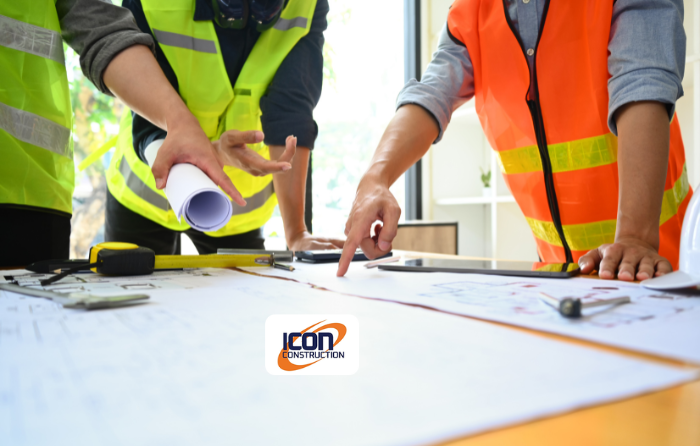
Pre-construction planning refers to everything that takes place before actual construction begins. This includes feasibility studies, budget estimates, site assessments, design reviews, permit applications, contractor selection, and project scheduling. Think of it as the blueprint for your blueprint.
For commercial projects specifically, this phase is not just helpful — it’s essential. Commercial builds involve multiple stakeholders, strict building codes, zoning regulations, and significant capital investment. Skipping or rushing through pre-construction planning almost always leads to costly surprises later on.
According to industry data, projects that invest time in thorough pre-construction planning are significantly more likely to finish on schedule and within budget than those that don’t.
The Core Goals of Pre-Construction Planning
There are three outcomes every solid pre-construction process should aim for:
- Clarity — everyone on the project knows what is being built, why, and how
- Predictability — costs and timelines are estimate with as much accuracy as possible
- Risk reduction — potential problems are identified and addressed before work begins
Tip 1: Start With a Clear Project Scope
Before anything else, you need a well-defined project scope. This means writing down — in specific terms — what you want built, what it will be used for, how many square feet you need, what finishes matter to you, and what your non-negotiables are.
Vague project descriptions lead to vague bids, which lead to disputes later. A scope document helps your architect, contractor, and trades team all work from the same set of expectations. It also helps you compare bids accurately — since all contractors will be pricing the same work.
If you’re not sure how to develop a project scope, a good general contractor will help you work through it before formal planning even begins. At Icon Construction, this is often one of the first conversations we have with clients during the pre-construction phase.
Tip 2: Get a Realistic Budget — Not a Wish-List Number
One of the biggest mistakes in commercial projects is treating the budget as a target rather than a constraint. A realistic budget isn’t just about what you want to spend — it’s about what a project of your type, size, and location actually costs to build today.
Pre-construction planning should include a detailed cost estimate that accounts for hard costs (materials, labor), soft costs (permits, design fees, inspections), contingency funds (typically 10–15% for unforeseen issues), and any owner-furnished items or equipment.
Why Contingency Budgets Matter
Many business owners budget tightly with no wiggle room. But commercial construction, by its nature, involves unknowns — hidden structural issues, supply chain delays, or design changes. A 10–15% contingency isn’t pessimism; it’s professional practice.
A transparent pre-construction budget review with your contractor helps you understand exactly where your money is going and flags line items that may need reconsideration.
Tip 3: Know Your Zoning, Permits, and Code Requirements Early
Zoning laws and building codes vary by city, county, and project type. Before you invest in design or break ground, you need to know whether your planned use is permitted on your site, what local codes require for your project type, how long permit approval is likely to take, and whether any variances or special approvals are needed.
This is especially important for commercial construction. Where projects like restaurants, medical facilities, assisted living centers, and industrial buildings each face different code requirements. Permit delays are one of the top causes of schedule overruns on commercial projects.
Working with a general contractor who knows the local permit process — and has established relationships with municipal offices — can significantly shorten your timeline.
Have questions about permits or zoning for your project? Talk to our team — we’re happy to help.
Tip 4: Choose the Right General Contractor Before Design Is Final
Many business owners wait until design is fully complete to bring in a contractor. But this approach has a significant downside: you may end up with a design you can’t afford to build.
Bringing your general contractor into the process during pre-construction planning — often called a design-assist or preconstruction services model — allows them to provide real-world pricing feedback as the design evolves. This prevents expensive redesigns after the fact.
When selecting a contractor for commercial work, look for a company with experience in your specific project type (retail, restaurant, industrial, religious, assisted living, etc.), local knowledge of codes and subcontractors, strong communication practices, and a track record of delivering projects on schedule.
Icon Construction has completed commercial projects across Northeast Ohio in sectors including retail, restaurants, assisted living, corporate offices, religious facilities, and industrial — giving us the experience to guide your project from day one.
Tip 5: Conduct a Thorough Site Assessment
Even if you already own the property, a formal site assessment is a key part of pre-construction planning. This involves reviewing soil conditions (especially for new construction or additions). Existing utility locations and capacities, access for construction equipment and material delivery, any environmental concerns (like asbestos in older buildings), and current structural conditions for renovation projects.
Skipping this step is one of the most common sources of unexpected costs in commercial construction. What you don’t know before you start will often cost you more to deal with once work is underway.
Tip 6: Build a Realistic Project Schedule
A project schedule is not just about when you want to open your doors. It’s a detailed map that includes design completion milestones, permit submission and approval windows, material procurement lead times, construction phasing, and final inspections and punch list completion.
Commercial construction timelines are often longer than people expect — particularly when custom materials, specialized trades, or complex permitting is involved. A good pre-construction planning process produces a schedule that’s based on real-world lead times and buffers for things that commonly run long.
Questions to Ask About Your Timeline
- Are there any long-lead items (custom millwork, specialty equipment, specific materials) that need to be ordered early?
- Is there a hard deadline driving the project — a lease start date, a franchise opening, an event?
- What is the permit approval timeline in your municipality?
- Will you need to phase the project to keep part of the space operational?
Tip 7: Align Your Design With Your Business Operations
It sounds obvious, but many commercial spaces are designed beautifully and work poorly. During pre-construction planning, take time to think through how the space will actually function day-to-day — not just how it will look.
For a restaurant, this means thinking about kitchen workflow, table turnover, and server stations. For a retail space, it means customer flow, product visibility, and checkout placement. For an office or corporate facility, it means how teams move between spaces and how the layout supports productivity.
Sharing these operational priorities with your architect and contractor during the design phase. — rather than after construction starts — prevents changes that are expensive and time-consuming to undo.
Tip 8: Plan for Communication and Decision-Making
One underrat aspect of pre-construction planning is deciding how decisions will be made and communicate throughout the project. Who on the owner’s team is the primary point of contact? How will design changes be requested and approve? What is the process for reviewing and approving change orders?
Establishing clear communication protocols before construction begins avoids. The confusion and delays that come from too many voices or unclear approvals. It also protects you — because undocumented verbal changes are a leading cause of disputes on commercial projects.
Tip: Ask your contractor how they handle change orders, who your day-to-day contact will be, and how project updates will be communicate before you sign any contract.
Start Your Commercial Project the Right WayFrequently Asked Questions About Pre-Construction Planning

How long does pre-construction planning take for a commercial project?
It depends on the size and complexity of the project. A straightforward retail fit-out might take 4–8 weeks for pre-construction. A new construction industrial facility or large mixed-use project could take 3–6 months. The bigger and more complex the project, the more time is need to do it right.
Can I skip pre-construction planning if I already have plans drawn?
Having architectural drawings is just one part of pre-construction. You still need cost estimating, site assessment, permit review, contractor selection, and scheduling. Skipping these steps because drawings exist is a common cause of budget and schedule problems.
What is the difference between pre-construction and design?
Design is about creating the architectural and engineering plans for the building. Pre-construction planning is broader — it includes design, but also budgeting, permitting, site analysis, contractor selection, scheduling, and risk review. Design is one input into pre-construction, not a substitute for it.
Do I need a general contractor during the pre-construction phase?
Not always required, but strongly recommended. A general contractor who provides preconstruction services can give you real-world pricing as design progresses, flag constructability issues, and help you understand permit timelines in your area. It almost always saves money and time on the back end.
What types of commercial projects does Icon Construction handle?
Icon Construction works across a wide range of commercial project types in Northeast Ohio, including retail, restaurants, corporate and industrial facilities, assisted living and healthcare, religious buildings, education, hospitality, and mixed-use developments. You can see examples of completed work at iconwcf.com/our-work.
How does pre-construction planning affect my construction budget?
Good pre-construction planning almost always reduces overall project costs. It prevents mid-project design changes, reduces scope disputes, identifies potential problems before they become expensive emergencies, and helps you avoid paying for rework. The upfront time investment typically returns significant savings.
What is the biggest mistake business owners make during pre-construction?
Underestimating time. Most business owners are surprised by how long permit approvals, design revisions, and material procurement take. Building in realistic timeframes — and a contingency buffer — during pre-construction planning is the single most effective way to avoid schedule stress.
Ready to Start Your Commercial Building Project?
Pre-construction planning is not a luxury — it’s the foundation that every successful commercial project is built on. When you get this phase right, everything that follows is more predictable, more manageable, and more likely to deliver the result you’re aiming for.
At Icon Construction, our team brings years of hands-on experience managing commercial projects across Northeast Ohio. We work alongside business owners, property managers, architects, and brokers to make sure every project starts with a solid plan and finishes with a result worth showing off.
Whether you’re planning a full building renovation, a ground-up commercial construction, or a targeted space improvement — we’d be glad to sit down and talk through what your project needs to succeed.
Book a Project Consultation With Icon Construction